In keeping with awards season...we at the blog want to congratulate this year's Ruby Finalists! The Rubies are handed out at the annual RWAus Conference and award excellence in romantic fiction from Down Under.
Romance Writers of Australia has announced the finalists in the 2009 Romantic Book of the Year. This year a record 144 books were entered in 4 categories.
This year's Harlequin Romance nominees for Romantic Book(s) of the Year are:
SHORT SWEET CATEGORY:
Claire Baxter - The Single Dad's Patchwork Family
Melissa James - A Mother in a Million
Marion Lennox - His Island Bride (Medicals)
Congratulations!!!!!!!!!!!!

Showing posts with label Melissa James. Show all posts
Showing posts with label Melissa James. Show all posts
Monday, May 25, 2009

Wednesday, April 08, 2009
Giving you an edge - with Melissa James
A big HRA blog welcome back to Melissa James with a post on how unorthodox stories and characters can give you an edge - if you're trying to break into publishing or needing something fresh for your 10th, 20th, or even 50th book!
Unorthodox Stories and Characters...the Edge You Need?
A recent phone call from my editor got me thinking. Being asked for “unorthodox families” in my next book, it made me think: what makes a family? In my brother’s family, for example, there are stepchildren, natural children and an adopted child, all of whom love him and call him Dad. In romance stories, so many different stories have been written, from tried and true, adaptations on fairy tales and Greek mythology, oddball comedy and action adventure. So what makes a family – or a story – unorthodox? I began thinking this as I folded washing tonight, and turned on the TV...and the movie “The Englishman Who Went Up a Hill But Came Down A Mountain” was on.
A recent phone call from my editor got me thinking. Being asked for “unorthodox families” in my next book, it made me think: what makes a family? In my brother’s family, for example, there are stepchildren, natural children and an adopted child, all of whom love him and call him Dad. In romance stories, so many different stories have been written, from tried and true, adaptations on fairy tales and Greek mythology, oddball comedy and action adventure. So what makes a family – or a story – unorthodox? I began thinking this as I folded washing tonight, and turned on the TV...and the movie “The Englishman Who Went Up a Hill But Came Down A Mountain” was on.
Now that’s an unorthodox movie: if you haven’t seen it, it’s about a town who believes Hugh Grant has a map they need for the town’s survival, and they keep deceiving him to keep him in the town until they can wangle it from him. “Harold and Maude”, “Napoleon Dynamite” and “The Princess Bride” are all oddball movies, to name a few...and they’re among my favourite movies. I like the unorthodox, the screwball, the unique take on life. I like characters like Greg House, the family in the old movie “You Can’t Take It With You” (highly recommended!) and Love Actually. I love the family dynamics in “While You Were Sleeping”.
Why can this give you an edge in your writing? Think about it. In a company swamped by submissions every week, what does it take to make your manuscript stand out? Deep emotion, of course; an unforgettable setting, a strong hero and feisty heroine, yes...but what about an unusual plotline? What about a story about something that touches your soul or your funny bone? I’ve based many books now on documentaries I’ve watched (A Mother in a Million was based on a documentary about missing people), a real family experience (Long-Lost Father’s daughter, Casey, is based on my niece, and my brother’s unusual but loving family), or facts gleaned from university readers (my first book, Her Galahad).
And another thing too often overlooked by writers is the secondary characters. As a regular contest judge, I so often see secondary characters are really rather cliché and boring, used only as a vehicle to further the relationship.
But why can’t they be entertaining, as well? The Princess Bride is a classic romance – but would it be such fun without Inigo “There isn’t a lot of money in revenge” Montoya, Fezzik the Giant, Prince Humperdinck or even the booing old crone?
And in books, even characters that never come on stage can entertain! Think of Bradley in Jennifer Crusie’s classic “Getting Rid of Bradley”. Think of characters that never talk, such as Fred the dog in “Anyone But You.” When you treat every character as a personality on their own, one that can last in the reader’s mind long after the book’s gone (I haven’t read either of those books in years), you give the entire book a life, a sparkle beyond the romance alone. And both those books were less than 60,000 words! So it’s not a matter of space; it’s a matter of character strength. Making each word count, bringing each character to life is so important.
For example, Liz Fielding’s excellent book “Reunited: A Marriage in a Million” had a secondary character who, on the surface, seemed hard, cold – Miranda. Yet she totally intrigued me. She remained so true to herself in the book, even as her brother (the hero) changed. She was grumpy, feisty, opinionated and yet obedient. What made her tick? We hardly know until her book...and she was just as fascinating then. Her conflict and character unfolded slowly, like a sunflower turning with the movement of the day. “Wedded In a Whirlwind” is a book I’d totally recommend for great characterisation as well.
I had quite a lot of kind feedback from my book “A Mother in a Million”, especially that readers loved the children. The hero had three kids, each with a distinct personality and a conflict that added to the romance’s problems. Tim, at only 8, had a terrible conflict: he’d promised his mummy he’d look after the family till she came back. 3 years later his mummy’s still missing, and he’s still the family watchdog. His fear that his father would find another woman, and knowing his little sister and brother desperately needed a mother, pulls at him until he can’t bear it, and disappears over and over, terrifying his father, Noah. Cilla is 5, and climbs trees when she can’t take the tension. She’s shy and sucks her thumb, but comes out of her shell for the heroine, Jennifer. Rowdy, the youngest, is only 3, but, undamaged by his mother’s disappearance, has a cute wisdom that changes the characters’ perceptions of each other – and his acceptance of the harder aspects of life show his personality.
The moral of this ramble is: each story should have a new perspective on life – and each character should have a unique personality. As the author, it’s your job to create a world where each person is true to themselves, whether for good or bad, quirky or sad, dark or hilarious. We all have quirky characters in our lives somewhere, and the best books (and characters) are drawn from life....or an overheard conversation on a bus or in a café. Be observant, look out for the traits that make each person unique, and adding that kind of strength to your current book’s secondary characters, and indeed the primary characters, may not only keep your book far from the cliché that bring forth rejection, but it just might keep an editor hooked from start to finish.


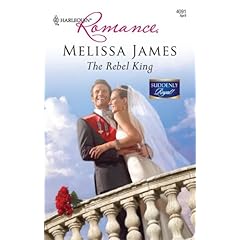
Melissa's latest book is THE REBEL KING, out this month and the first of her Suddenly Royal series!
Monday, February 16, 2009
Twist that Plot! Melissa James
Throughout the year, we'll be bringing you posts from your favourite authors. Sometimes they will be fun, have-a-chat type posts, some will be a look behind the scenes of the newest releases, and some will be for those readers who are trying their hand at writing their own romances.
In our very first "craft" post of the year, please welcome Melissa James with some advice on twisting an old hook into a new idea!
Twisting an Old Plot into a Fresh Idea
Anna Jacobs, author of 45 published novels so far, wrote something in her handbook called Plotting and Editing that made a great deal of sense to me. On page 19, under the heading, What Makes Your Book special?, she writes:
"All the time you're writing, whichever method you use, you should bear in mind that there has to be something that makes your story special, different, exciting—both to an editor who reads dozens of manuscripts and proposals each month, as well as to readers after publication. You also need to remember that merely 'good' isn't enough to sell a manuscript to a publisher—or to fascinate readers. Your story will have to be 'sparkling', especially if you are unknown as a writer."
Okay, that's wonderful, sage advice from a lady who knows what she's talking about. But here's the crunch for most of us: how do we do it? How do we find a true definition of those two dreaded words, emotional punch, and put it in our work?
That's what this workshop is for: to take existing plots and make them special, so special your characters will flow from it, and be so real they'll leap up yelling at an editor, "buy me!" I can't give you any magic formulas to write it to publishing standard; all I can do is pass on the details of my personal journey on plot discovery, and find ways to make something sparkling from basic plots.
It's said there are 8 basic plots for a romance novel. As some of you know, with help from the RWNZ email list, I got them down pat recently. They are:
* Beauty and the Beast
* King and beggar maid/ princess and pauper
* Reunion after painful past
* Secret Baby* Cinderella
* Marriage of convenience
* Forced Marriage/blackmail
* Bad girl/Good boy and vice versa
Now we all know the basic twist of combining two or more of these elements, such as reunion/secret baby, or marriage of convenience/Cinderella. Adding such things as 'woman in danger' usually stems from these basic plots, and can be innovative and effective; but the plot twists I'm talking about are different.
I'm going to start with a working example. The last thing I want (or probably you) is for me to bore you with the story of my books. But five minutes should make the point, and we can move on together. Her Galahad, which was released by Silhouette Intimate Moments in October 2002, combines a few basic plots:
* Princess and pauper
* Reunion after painful past
* Secret Baby
* Forced Marriage/blackmail
* Good girl/Bad boy
Then I took each theme and twisted them.
1. Princess and pauper? How could I twist that? By turning it around. They had been, in their painful past, princess and pauper, rich white upper-class girl and Aboriginal carpenter. Now she's a poorly paid teacher on the run from her obsessive, abusive, bigamous 'husband', and he's a rich artist. He wants seven kids; she knows she can't have any more. So she's on the back foot right from the start.
2. Now the Secret baby plot? It sounds plain and straightforward, doesn't it? So how to twist that? By making the baby so secret the heroine thinks she died. And the hero hates the heroine because he thinks she adopted their baby out. And he also has a baby, a son from another relationship with a woman who died. There's always ways and means to twist something new from a plot!
3. I twisted the good girl/bad boy plot by giving the good girl martial arts skills and turning on her family, willing to imprison them if she has to, on a quest to find her child they adopted out and told her had died. The bad boy becomes a good hero by being a bad boy not of his own choice, but imprisoned for crimes he didn't commit—by the man the heroine marries five weeks after the hero's arrest, and the heroine's brother and father. And this bad boy's been declared dead twice—once legally, with a death certificate to prove it. The heroine has a matching certificate, dated three years before his. And if the cops find him, he'll be imprisoned again just for being alive (by the way, this came from truth: in my university course I discovered the Australian government issued fake death certificates to Aboriginal kids taken from their families to stop them finding their heritage and make them 'blend' into white society. I thought, if they can do it, it can be done!)
4. The forced marriage/blackmail plot? I twisted that by giving the hero and heroine a secret marriage of one day, and the heroine, a forced marriage to a man who blackmailed her into becoming an unwitting bigamist, knowing she thought her true husband was dead.
From all these unusual plot twists, I suddenly found a wealth of creative emotion coming straight from the heart. I felt for this suffering hero and heroine. I wanted them to have a happy ending because, hell, they deserved it! I didn't just want to write the book by the time I'd finished - I was compelled to. The characters were so real to me I couldn't leave them hanging in the air. I finally understood why actors talked about their character in a movie as if that person was real: because, to them, they were. They had to be real to the people involved, or the characters will feel wooden, and the movie won't work for the actors or the theatre goers. That was what happened to me with Her Galahad, and the way I continued with the Nighthawks series, and now in writing for the Harlequin Romance line. I do it every time: the basic plots with the twist in the tail!
Emma Darcy says in her how-to book that empathizing with a hero or heroine is important—but it's not always just 'writing from the heart' that does it. You can make a heroine cry, she says, but will it make the reader cry?
Not if they haven't gone on the journey with the heroine first, to feel what she's feeling before she cries. So how do we do this? We, the author, have to be on our heroine’s journey, not merely thinking what she thinks, but *feeling* what she feels.
It's true what Valerie Parv says in her How-to book: You have to torture your characters! You have to make them orphans, throw them in boiling oil, drop them out of trees and throw them off cliffs, shoot them, stab them, and then, right when it can't get worse—make it worse! Why? Empathy! Because readers love to go on the journey. They want to feel what the characters are feeling, to cheer them on, to find reasons for these people to deserve their happy ending. Without this vital element, a book loses its interest. If an author writes more than one book where I don't feel for the characters I won't buy that author again. I'm afraid I'm not loyal to authors: I read what entertains me.
How about you? What is it you look for in a book? What drags you in? What books are your all-time favorites? Do you know why you love those books? Then take those well-loved books and research them like university readers. Analyze every line, every part of the book you love, and ask why?
Do you know the basic plot of that book you love? Now think about the twists on these plots the author used to hook you in. These points show exactly what I meant in the beginning: these authors have twisted the basic, well-loved plot to make it extraordinary, stand-out, unforgettable — the emotions have come right from the author's heart. It’s not rocket science, this is doable for any writer. Find what your plot is, and find how to twist it so that something unique happens!
When you have several plot twists, it prevents the dreaded sagging middle – especially if you pace them out, use one plot twist per “turning point” in the novel. Create it in a revelation of some sort, an epiphany if you will, that changes the other character’s preconceived notions on something important. Remember you can't bombard the reader with too much information at once, but to add another twist just as the story slows, or becomes close to resolution—fabulous! Something to make the reader gasp, be they judge, editor, agent or someone who picked it up in a bookshop. Isn't that what you love in a book — something to keep that hero and heroine apart just a little longer?
Get those plot twists going. Get them spinning like juggler's balls in the air and catch them, one by one! Or let them fall with a crash! Either way, your story keeps going without a sagging middle, and should keep the reader hooked.
In our very first "craft" post of the year, please welcome Melissa James with some advice on twisting an old hook into a new idea!
Twisting an Old Plot into a Fresh Idea
Anna Jacobs, author of 45 published novels so far, wrote something in her handbook called Plotting and Editing that made a great deal of sense to me. On page 19, under the heading, What Makes Your Book special?, she writes:
"All the time you're writing, whichever method you use, you should bear in mind that there has to be something that makes your story special, different, exciting—both to an editor who reads dozens of manuscripts and proposals each month, as well as to readers after publication. You also need to remember that merely 'good' isn't enough to sell a manuscript to a publisher—or to fascinate readers. Your story will have to be 'sparkling', especially if you are unknown as a writer."
Okay, that's wonderful, sage advice from a lady who knows what she's talking about. But here's the crunch for most of us: how do we do it? How do we find a true definition of those two dreaded words, emotional punch, and put it in our work?
That's what this workshop is for: to take existing plots and make them special, so special your characters will flow from it, and be so real they'll leap up yelling at an editor, "buy me!" I can't give you any magic formulas to write it to publishing standard; all I can do is pass on the details of my personal journey on plot discovery, and find ways to make something sparkling from basic plots.
It's said there are 8 basic plots for a romance novel. As some of you know, with help from the RWNZ email list, I got them down pat recently. They are:
* Beauty and the Beast
* King and beggar maid/ princess and pauper
* Reunion after painful past
* Secret Baby* Cinderella
* Marriage of convenience
* Forced Marriage/blackmail
* Bad girl/Good boy and vice versa
Now we all know the basic twist of combining two or more of these elements, such as reunion/secret baby, or marriage of convenience/Cinderella. Adding such things as 'woman in danger' usually stems from these basic plots, and can be innovative and effective; but the plot twists I'm talking about are different.
I'm going to start with a working example. The last thing I want (or probably you) is for me to bore you with the story of my books. But five minutes should make the point, and we can move on together. Her Galahad, which was released by Silhouette Intimate Moments in October 2002, combines a few basic plots:
* Princess and pauper
* Reunion after painful past
* Secret Baby
* Forced Marriage/blackmail
* Good girl/Bad boy
Then I took each theme and twisted them.
1. Princess and pauper? How could I twist that? By turning it around. They had been, in their painful past, princess and pauper, rich white upper-class girl and Aboriginal carpenter. Now she's a poorly paid teacher on the run from her obsessive, abusive, bigamous 'husband', and he's a rich artist. He wants seven kids; she knows she can't have any more. So she's on the back foot right from the start.
2. Now the Secret baby plot? It sounds plain and straightforward, doesn't it? So how to twist that? By making the baby so secret the heroine thinks she died. And the hero hates the heroine because he thinks she adopted their baby out. And he also has a baby, a son from another relationship with a woman who died. There's always ways and means to twist something new from a plot!
3. I twisted the good girl/bad boy plot by giving the good girl martial arts skills and turning on her family, willing to imprison them if she has to, on a quest to find her child they adopted out and told her had died. The bad boy becomes a good hero by being a bad boy not of his own choice, but imprisoned for crimes he didn't commit—by the man the heroine marries five weeks after the hero's arrest, and the heroine's brother and father. And this bad boy's been declared dead twice—once legally, with a death certificate to prove it. The heroine has a matching certificate, dated three years before his. And if the cops find him, he'll be imprisoned again just for being alive (by the way, this came from truth: in my university course I discovered the Australian government issued fake death certificates to Aboriginal kids taken from their families to stop them finding their heritage and make them 'blend' into white society. I thought, if they can do it, it can be done!)
4. The forced marriage/blackmail plot? I twisted that by giving the hero and heroine a secret marriage of one day, and the heroine, a forced marriage to a man who blackmailed her into becoming an unwitting bigamist, knowing she thought her true husband was dead.
From all these unusual plot twists, I suddenly found a wealth of creative emotion coming straight from the heart. I felt for this suffering hero and heroine. I wanted them to have a happy ending because, hell, they deserved it! I didn't just want to write the book by the time I'd finished - I was compelled to. The characters were so real to me I couldn't leave them hanging in the air. I finally understood why actors talked about their character in a movie as if that person was real: because, to them, they were. They had to be real to the people involved, or the characters will feel wooden, and the movie won't work for the actors or the theatre goers. That was what happened to me with Her Galahad, and the way I continued with the Nighthawks series, and now in writing for the Harlequin Romance line. I do it every time: the basic plots with the twist in the tail!
Emma Darcy says in her how-to book that empathizing with a hero or heroine is important—but it's not always just 'writing from the heart' that does it. You can make a heroine cry, she says, but will it make the reader cry?
Not if they haven't gone on the journey with the heroine first, to feel what she's feeling before she cries. So how do we do this? We, the author, have to be on our heroine’s journey, not merely thinking what she thinks, but *feeling* what she feels.
It's true what Valerie Parv says in her How-to book: You have to torture your characters! You have to make them orphans, throw them in boiling oil, drop them out of trees and throw them off cliffs, shoot them, stab them, and then, right when it can't get worse—make it worse! Why? Empathy! Because readers love to go on the journey. They want to feel what the characters are feeling, to cheer them on, to find reasons for these people to deserve their happy ending. Without this vital element, a book loses its interest. If an author writes more than one book where I don't feel for the characters I won't buy that author again. I'm afraid I'm not loyal to authors: I read what entertains me.
How about you? What is it you look for in a book? What drags you in? What books are your all-time favorites? Do you know why you love those books? Then take those well-loved books and research them like university readers. Analyze every line, every part of the book you love, and ask why?
Do you know the basic plot of that book you love? Now think about the twists on these plots the author used to hook you in. These points show exactly what I meant in the beginning: these authors have twisted the basic, well-loved plot to make it extraordinary, stand-out, unforgettable — the emotions have come right from the author's heart. It’s not rocket science, this is doable for any writer. Find what your plot is, and find how to twist it so that something unique happens!
When you have several plot twists, it prevents the dreaded sagging middle – especially if you pace them out, use one plot twist per “turning point” in the novel. Create it in a revelation of some sort, an epiphany if you will, that changes the other character’s preconceived notions on something important. Remember you can't bombard the reader with too much information at once, but to add another twist just as the story slows, or becomes close to resolution—fabulous! Something to make the reader gasp, be they judge, editor, agent or someone who picked it up in a bookshop. Isn't that what you love in a book — something to keep that hero and heroine apart just a little longer?
Get those plot twists going. Get them spinning like juggler's balls in the air and catch them, one by one! Or let them fall with a crash! Either way, your story keeps going without a sagging middle, and should keep the reader hooked.
Monday, January 28, 2008
Last Chance...

Just a reminder....this is the last week for entering to win a copy of Melissa James's MOTHER IN A MILLION...so send an e-mail to hrablog@hotmail.com and enter. The draw will take place on Friday and I'll be posting the winner. And get ready...we have some very exciting things planned for February!
Tuesday, January 08, 2008
Spotlight in Six - Melissa James
 Welcome to the first Spotlight in Six for 2008! This month we're joined by Melissa James, whose current release is Mother In A Million.
 As part of our Mills and Boon Centenary celebrations, we're holding contests throughout the year. Melissa is generously offering a signed copy of Mother In A Million to a lucky reader! All you have to do is send an e-mail with the subject line of CONTEST to hrablog@hotmail.com to be entered. The closing date is Jan 31 and then the winner will be announced on the blog and contacted for their mailing information!
Here she is....Melissa James!
 Where do you find new and fresh ideas?
The news, the net, songs, chance remarks by family, friends, strangers – there’s so much inspiration out there. I find listening to people talking on buses and in cafes very inspiring – though it’s much harder now that everyone around me speaks in foreign languages. I’m trying to learn German but I’m finding the grammar very tough going!
Writers often use photos of celebrities as “casting”. Do you do this, and who has inspired some of your characters?
I have, actually – not all the time, just when faces inspire me. I’ve used Ewan McGregor for the face of Noah in A Mother In A Million, my January release; I’ve used Australian actor Ernie Dingo for the face of Jim in Her Outback Knight, my July 07 release. I trawl the net for faces that suit my characters, and quite often they’re just interesting faces, not famous ones.
What are your favourite and least favourite parts of writing a novel? Is there a particular section that you struggle with?
Favourite? The exciting part is starting a story, with so many possibilities! I love the tense leadup to the first kiss; I love discovering things about my characters at the same time they do. I love finding beautiful similes and poetic stanza to bring my readers lovely visuals or insights to my characters.
I hate saying goodbye, really. My stories and characters haunt me while I’m writing and saying goodbye hurts. The only antidote is, of course, starting a new possibility – a new book! J
When you are not writing, what do you do? How do you pamper yourself?
Moving to Switzerland from Australia was pampering in itself in a way. We live in a small but postcard-pretty village in eastern Switzerland, in rolling hills and wine country, with the Rhine River winding through. A walk, even in freezing winter, is a treat, with the cold, clean air and the views. I love going to the movies – really looking forward to seeing P.S: I Love You with one of my new friends here. And we’re discovering the delights of skiing together as a family on weekends. I’m falling over a lot but loving it anyway! And finally, my darling husband takes us out once or twice a week to the local restaurants to try Swiss/German food. I feel very pampered lately!
Imagine you’re stranded…where are you and who are you with?
Anyone apart from my darling husband, you mean?
Finally, please tell us what’s up and coming for you in the months ahead!
Release-wise, I have two books and a novella released this year, including taking part in two exciting promotions: the Marriages of Convenience anthology, and my novella was a ton of fun to write – an ex-rocker and a wild old boy’s daughter running off to marry for all the wrong reasons. I had a ball with it. And starting in April and finishing with my novel in September, the Wedding Planners series is a fun, touching series about 5 cynical women who find love unexpectedly – and the one woman who did believe in a happily-ever-after, whose wedding is going to save The Wedding Belles from going under (my heroine, Julie), looking as though she’s going to lose it all.
Right now, I’m working on my own series, which I’m very excited about. Look for the Suddenly Royal series in 2009…a fireman and his ballet teacher sister find their lives changing suddenly and irrevocably. It’s kind of a Princess Diaries meets Notting Hill…fun and poignant – and with very high stakes. I don’t have a release date as yet, but I’m loving writing the books and very much looking forward to seeing what my readers think of it.
Thanks for having me on the blog, and all the very best to your readers in the coming year. Happy reading with Harlequin Romance!
Subscribe to:
Posts (Atom)